The first and most unyielding rule of Top End crocodile safety is to put some faith in what the rangers and official signs tell you and swim nowhere else. There are fine rivers, billabongs and creeks in the Northern Territory, but one does not indulge in guesswork or a “she’ll be right” attitude in crocodile country.
In this guide I set out the ins and outs of swimming in the NT, from the effect wet and dry seasons have on risk to the proper response to a crocodile or its traces. For a quick overview, see Kakadu croc rules by season. I am Jemima Ashdown and my aim is to give you advice that is plain enough to put into practice when you are standing by an alluring stretch of water hot and weary with red dust on you.
The Essential Rule
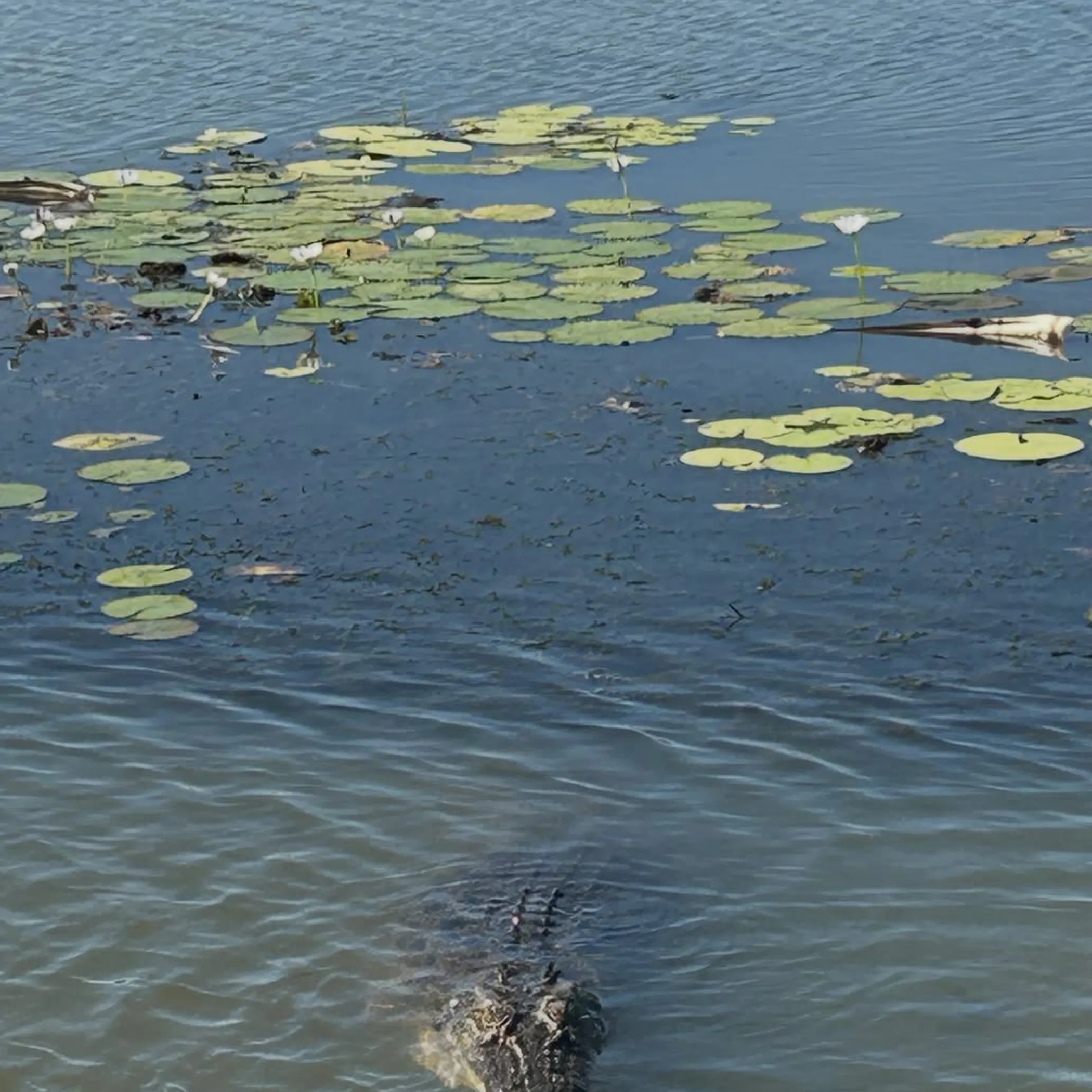
Make the sensible choice and confine yourself to a designated area with up to date safety signage. “No sign, no swim” is a good way to go in the Top End; after a flood or tidal change the situation may be different. Should you find a sign in disrepair or the area is closed, or you can get no confirmation from rangers, then do not go in the water. Do not be under the impression that because the water is clear it is safe, or that nothing is lurking in the murk. Saltwater crocodiles are hard to spot and you will not be given much warning. Nor is a quiet spot in the morning any guarantee a croc has not put in an appearance since. Just because there are others around does not make it a pool.
Read Signs Before Unpacking
Before you unpack, look at the official signs by the car park, the track or boat ramp and at the water’s edge. Heed any directions or temporary warnings from rangers, no matter how well used a place is. The Northern Territory Government, NT Parks and Parks Australia will put out access advice if flooding, road work or a croc sighting calls for it. It is worth looking at the Be Crocwise material from the NT Government before you head off; put the details to hand as your mobile will have as much reception in the wet season as an ice block.
A Safer Waterway
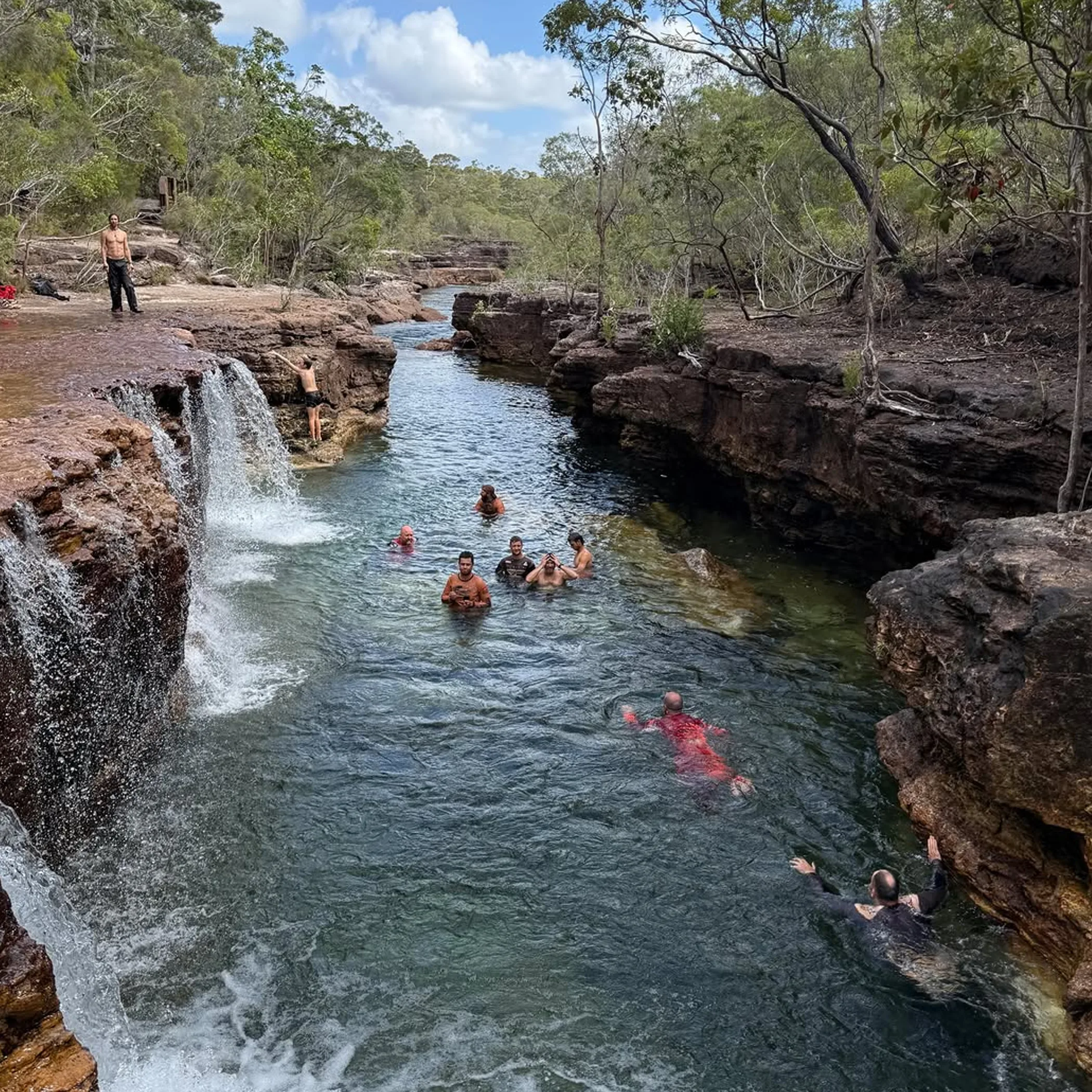
It is the site itself that matters, not the name of the park. While you will find plenty of swimmers in places like Kakadu and Litchfield National Park, not every gorge or plunge pool is fit for the purpose. On arrival, put the question to a ranger or the visitor centre. They will have a better sense of the conditions than any social media post or guidebook, factoring in things like water levels or recent sightings.
Popular settings compared
| Setting | What To Check | Best Decision |
|---|---|---|
| Designated swimming area | Current signs, ranger input and the water level | Only swim if the area has been approved and is open |
| Waterhole or plunge pool | Access, clarity of the water and any debris | When in doubt about the conditions or warnings, stay out |
| River, billabong or creek | Steep banks, tides or fishing activity | Regard it as unsafe unless an authority says otherwise |
| Estuary or coastal waters | Tides, mangroves and boat traffic | Swim only if an official gives you leave to do so |
One might think the presence of a freshwater crocodile makes a waterway safe. A dangerous assumption. For all they are smaller than their saltwater cousins they are still wild, fast and ill mannered. Knowing the species is no substitute for a permit to swim.
Kakadu and Litchfield
At any swimming spot in Kakadu National Park you would do well to follow the Parks Australia and ranger directives. It is a vast park and what is safe at one waterhole is not necessarily so at a river or billabong close by. Verify your access prior to departure, especially in the aftermath of heavy rain.
As for Litchfield, do not let the park’s reputation be your guide to the status of a swimming area. Many a visitor has had cause to enquire about Litchfield crocs, expecting total safety at a waterfall or pool. The reality is more circumspect: stick to the signed areas and if a ranger puts out a warning, be on your way.
Do not take chances
For the most part crocodile safety comes down to not giving an encounter a chance. Orderly conduct is called for. Remain in the approved zone and resist the urge to make of your swim a fishing trip or a picnic at the edge of the water or some kind of dare on a muddy bank. To be safe in the water with a saltwater crocodile one has to have some regard for its habitat. You may not see a crocodile and yet it is there. An adult of the species can put in excess of 6 metres, so give even a modest sized one plenty of room.
Tidy up at the Water’s Edge
There should be no food or fish offal, bait, rubbish or cleaning detritus left by the water. Put away from waterways any dishes to be washed, gutted fish or leftovers. The scraps of a fish can lead a crocodile to make an association between your boat, yourself and what you are eating in that spot.
Make sure to put some distance between yourself and overhanging vegetation, steep or muddy banks. If you come across large drag marks, tracks or mud that has been disturbed, consider it a sign to move on rather than a wildlife photo op. Crouching at the edge for one is not advised.
Natural waterways are no place for diving or jumping; the extra splash takes away control and you will not see hazards as easily. Have children within reach and do not let them play at the edge while the adults are preoccupied with a camera, phone or the billy.
Have a Plan for Leaving
Know where the exit is before you go in, put your keys and footwear in one place and make sure all are clear on where to meet up. At a remote waterhole park to face out if you can. On a track that is wet, corrugated or full of caravans you will want to allow more time than the signs would have you think.
In the absence of a car, see that transport is in order beforehand. Rideshare is limited outside the major centres and public transport is non-existent in many a remote swimming area. A local tour operator of repute will have current access information and can put you there, but the site’s own signs must be heeded.
When to Steer Clear
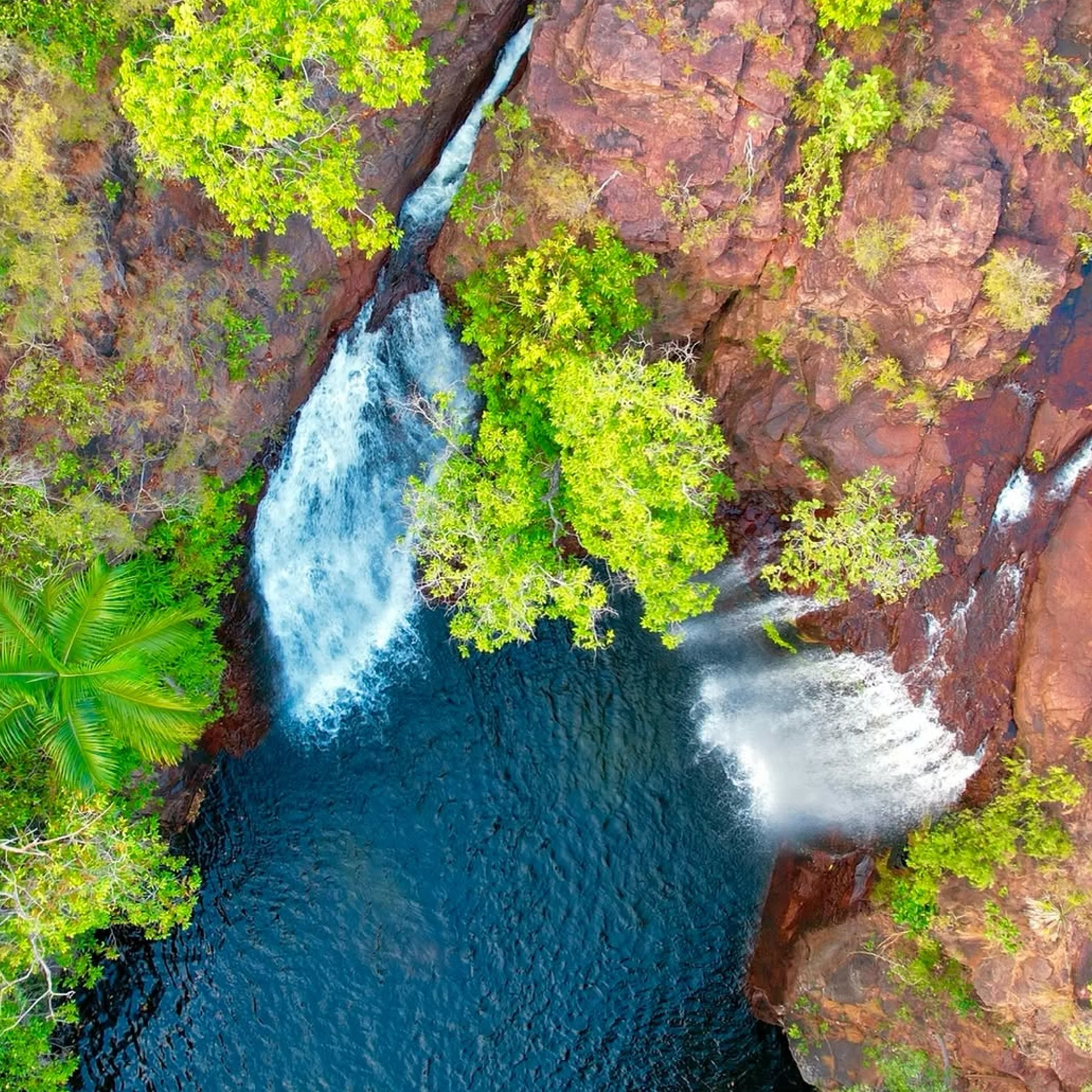
Poor visibility at night, dusk or dawn makes for added risk in detecting a crocodile. You might be tempted by a hot afternoon for a late dip, but low light is not the occasion to try your luck. Take a head torch for the walk back, not to swim after dark.
Then there is the matter of weather. Storms, cyclone alerts, flooding and heavy rain will change the situation in short order, putting debris in pools and opening up waterways that were separate. In the wet season the risk from crocodiles is as much about currents, animal movement and what you can see as it is the rain itself.
An Eye on the Weather and Water
A strengthening current, falling visibility or the sound of thunder is enough to get out of the water. Do not wade into swollen creeks or runoff channels. From the bank a piece of water can look deceptively calm when in fact there is a deep channel or strong current and submerged branches to be had.
Road closures and a flooded crossing will put an end to travel in the wet season. Do not count on a return route over a creek; check conditions first and have fuel and drinking water to spare. A four-wheel-drive is no safeguard against floodwater, only a pricier means of becoming stuck.
For the Sake of Children and Pets
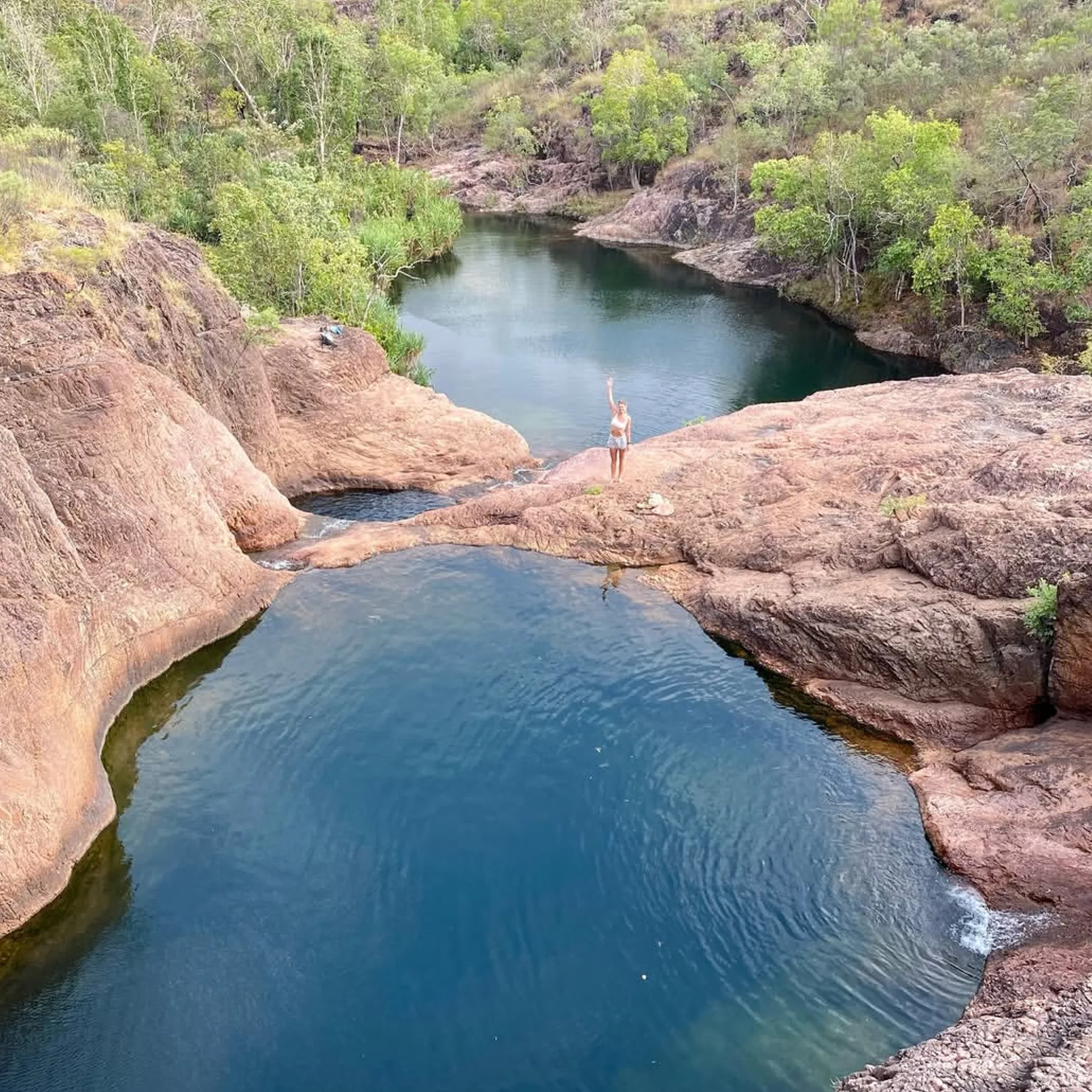
Around Top End waterways they require closer watch since a crocodile can make its approach in silence and speed. Young children are to be kept from the edge unless in an approved area, and within arm’s length of them in the water.
Unless the rules of the park say otherwise, do not have dogs paddling or nosing about on a muddy bank. A pet at the edge is an attraction and trying to save it puts a person in harm’s way.
Where Families Go Wrong
It is easy to think a quick stop for a picture is of no consequence. One goes to the bank, the child in tow, and the next thing the group is nearer the water than was meant to be. Lay down some ground rules: no approaching the edge on your own and heed the official advice.
Some make the error of thinking numbers are protection. They are not. A crowd is noisy and a distraction but it is no substitute for a ranger’s word or proper distance. Make sure the children are on the landward side and never put them in the position of feeding wildlife.
Seasonal Crocodile Risk
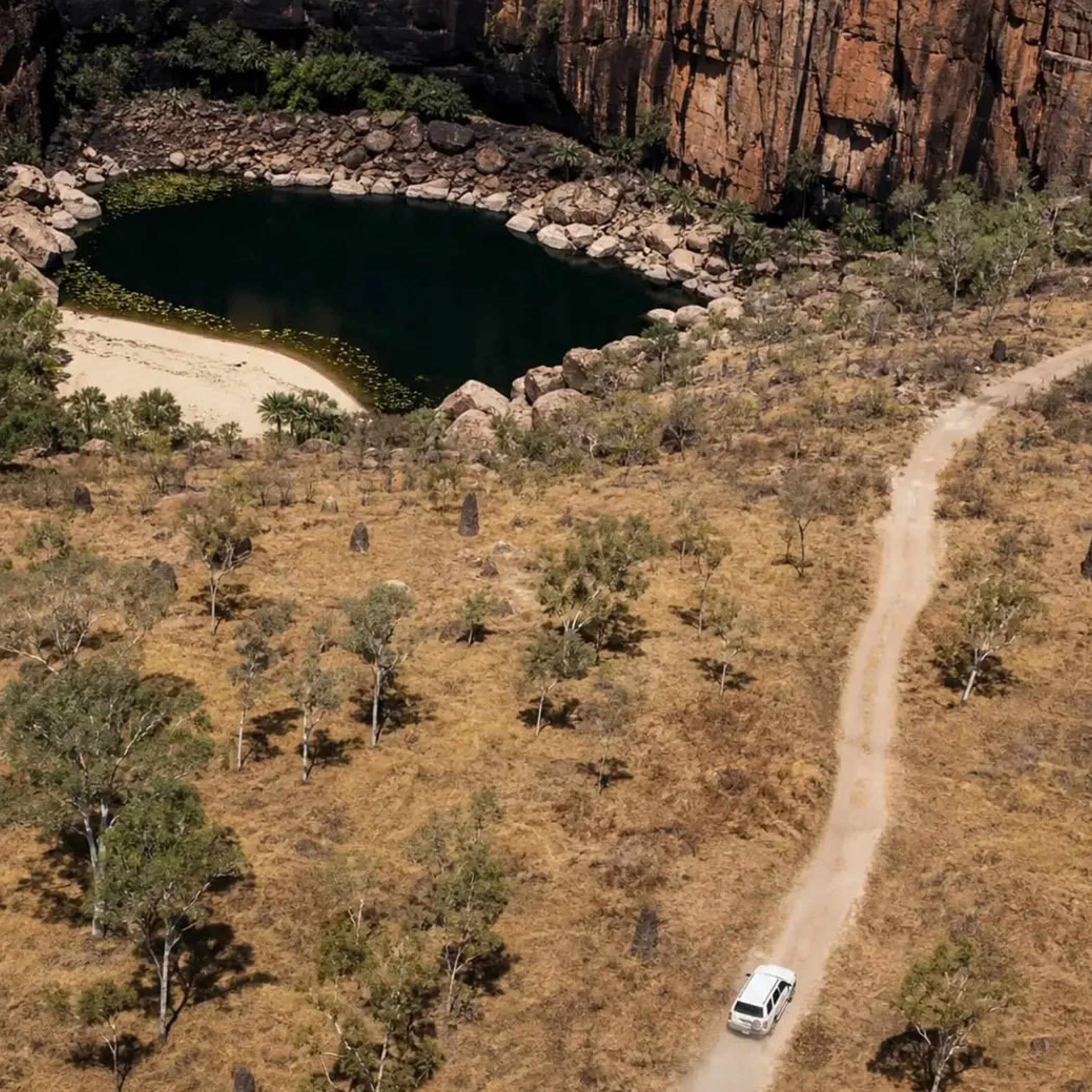
The dry season affords better conditions for popular swimming areas and the roads are more to be relied on. But not every waterway is to be considered safe. Any NT advice on swimming in the dry is still contingent on the site, what the signs say and reports of crocodiles in recent times.
With the wet season comes its share of heat and storms, flooding and altered access. The breeding season too calls for a measure of caution in crocodile country, yet there is no date on the calendar that will render one waterway safe and another not. In Kakadu it is best to put aside any month-by-month guarantees and heed what rangers have to say about the rules at the time.
Seasonal Planning Table
| Seasonal Situation | What Can Change | Safer Approach |
|---|---|---|
| Dry season | Easier access, lower water and popular spots get crowded | Do not take a busy site for granted as being safe; be there early and heed the signs |
| Wet season | Storms, road closures, tracks turning to mud and interlinked waterways | Make sure you are clear on any closures before you set off, steer clear of unauthorised swimming |
| Breeding season | Some areas may demand more care due to crocodile activity | Put general dates to one side and act on the advice of NT Parks and rangers |
| After a sighting | Quick changes to advice or an area being shut down | Heed all temporary warnings and vacate the site |
For a day out, resist the urge to putter between a number of waterways. Pick an officially sanctioned place to swim and a land-based activity in the vicinity. Allow for the drive back, for parking, ranger checks and whatever the weather brings. A hasty plan is an invitation to the kind of shortcuts that make a bush trip a hardship.
Responding To Crocodile Signs
A crocodile should be met with immediate withdrawal from the water and a word to fellow visitors. There is no call to put yourself in harm’s way for a picture, to feed the animal or throw things at it. Report it to the rangers or park authority at the first opportunity if anyone is near the water.
Should a crocodile come your way on land, put some distance between you and head for a vehicle, other people or a good barrier. Running for the water is not the answer, nor is trying to put the animal in a corner. If an encounter draws someone into the water, sound the alarm and let emergency services give you your instructions; do not go in after them.
Leave these warning signs alone:
- Any official closure or where the signage is at odds or in disrepair.
- Tracks, slide marks, disturbed mud or a croc by the water.
- Bait, fishing remains, carcasses or evidence of feeding.
- Where the water is running strong or is murky from the tides or flood, visibility is poor.
- And any waterway not put forward as a place to swim.
Frequently Asked Questions
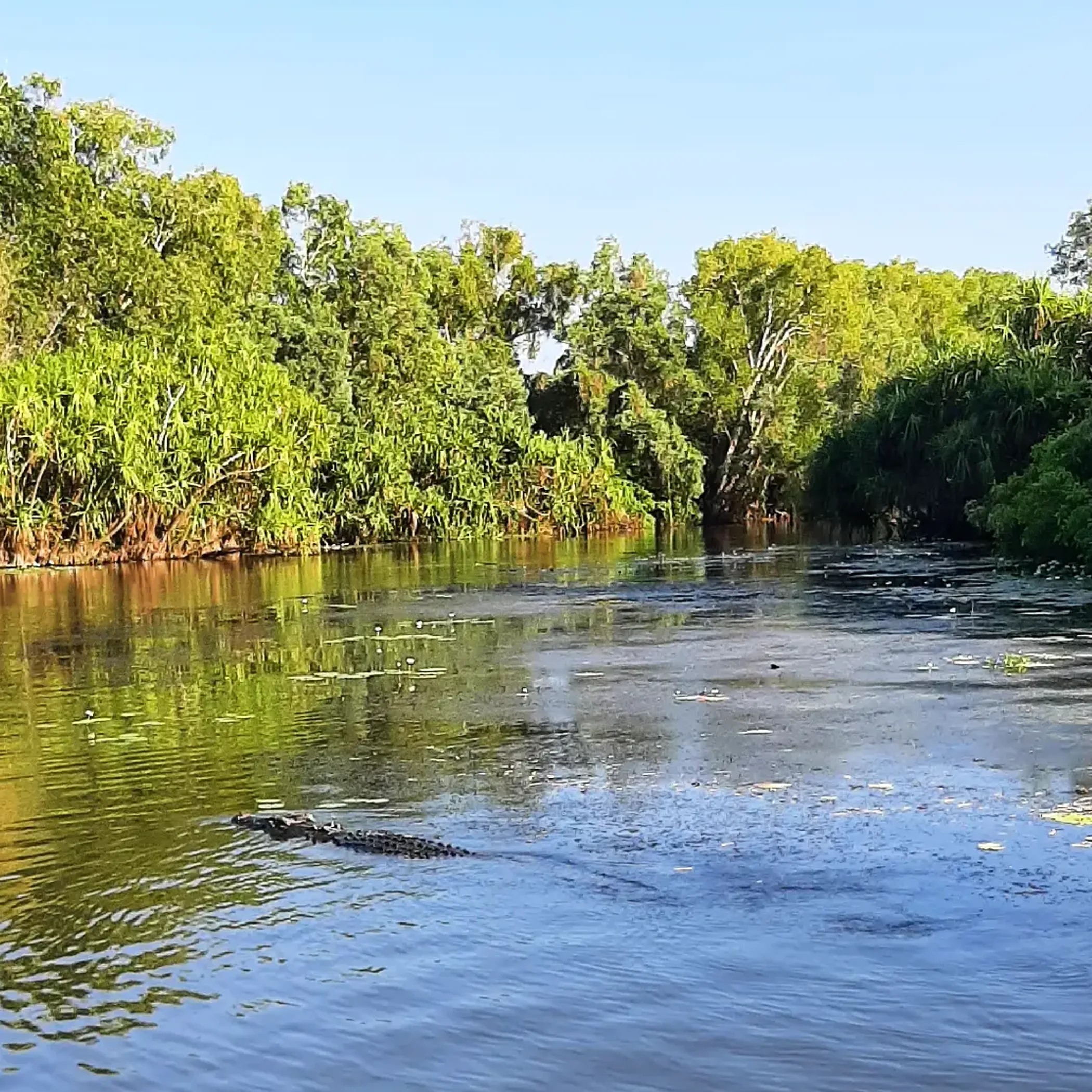
Crocodile myths have a way of spreading so these are common queries. The following answers are straightforward but do not supersede an official warning.
Will A Rubber Band Stop A Crocodile?
No. It is not going to protect a swimmer or hold a crocodile’s attention for long. Consider talk of magic pressure points or little objects as nonsense. Distance and official counsel are what you want.
What Should You Do If A Crocodile Chases You?
Get away from the water and towards a solid barrier or people. If the situation is dire, contact emergency services. Do not stand around for a photo or try to run the crocodile to ground.
Is It Safe To Swim With Saltwater Crocodiles?
Not something to do deliberately. Confine your swimming to an area the authorities have deemed suitable and be prepared to leave if the advice alters. There is no good reason on holiday to be in a waterway where they are known to be.
What Was The Biggest Crocodile Steve Irwin Ever Caught?
Informal claims on this score are often made without any verified measurement. For a traveller the matter is simple: a size record does not indicate the safety of a swimming spot today.
Are Freshwater Crocodile Areas Safe?
You cannot assume so. They are wild animals and the location may also harbour saltwater crocs. Rely on the ranger and the signs at the site, not species assumptions.
Make The Safe Call
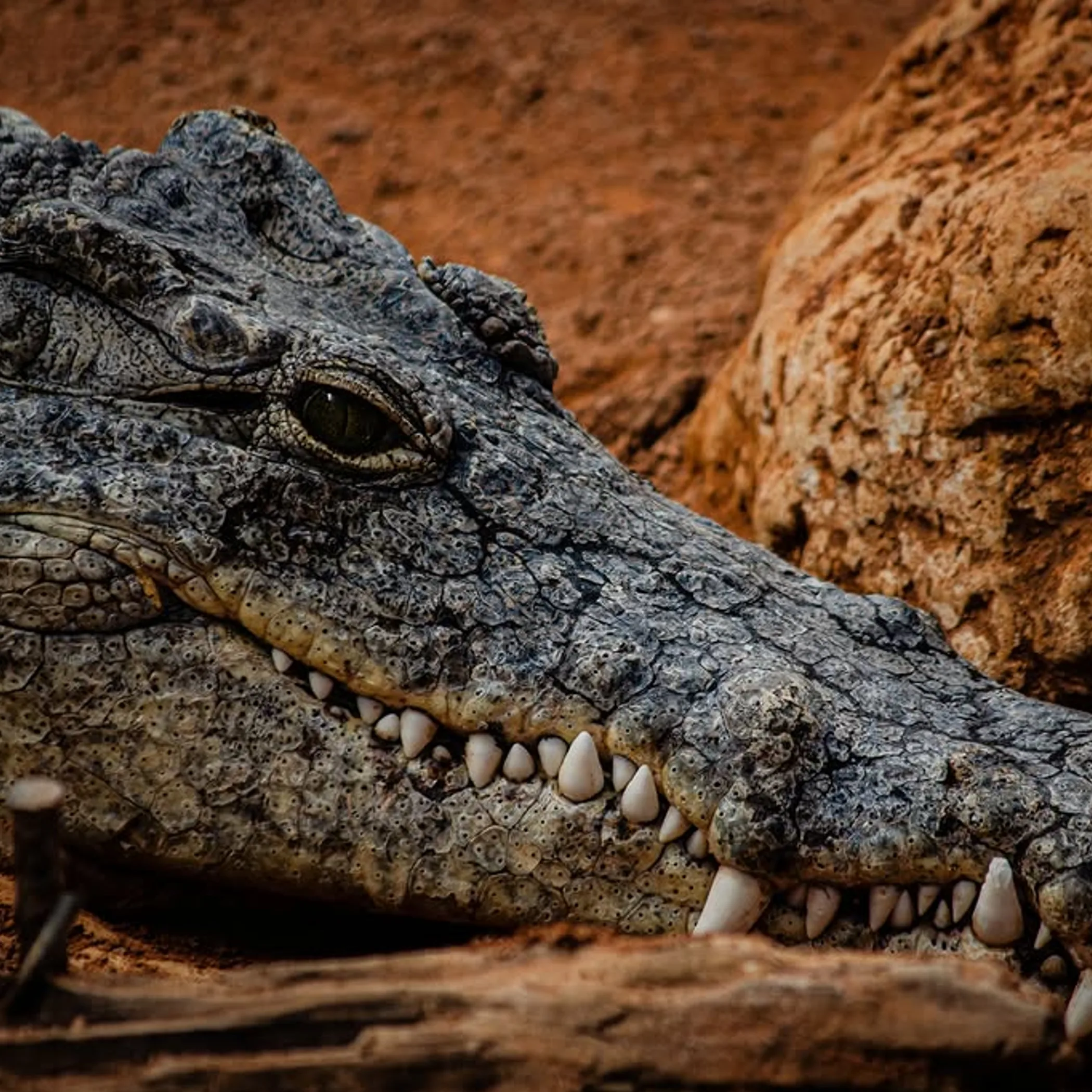
There is more to be had from Top End travel when the rules are observed and one is not sidetracked by the view. Stick to the designated areas, do not swim at night or along the edge, and consider an unsignposted waterway out of bounds.
In short, no guessing, no feeding, no cutting corners. Keep pets and children in hand, see what the rangers say and give yourself time for an unhurried return. The crocs have been in those waterways well before your itinerary did, so let them have it and make use of what the Northern Territory has open for you.
